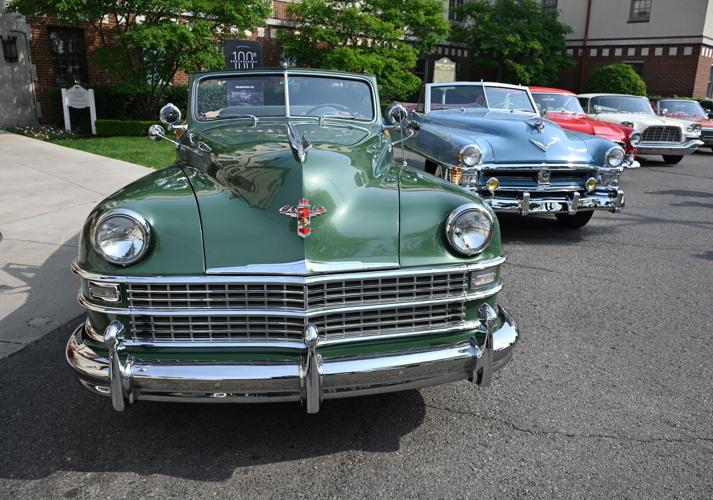
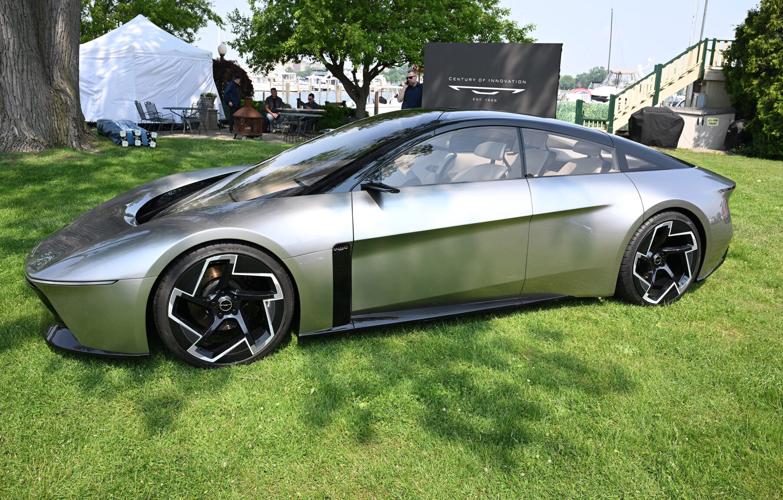
A 1948 Chrysler Town & Country, foreground, was among the classic models on display June 4 at an event celebrating Chrysler's 100th anniversary at the Detroit Yacht Club on Belle Isle in Detroit.
Chrysler CEO Chris Feuell, left, and Ralph Gilles, Stellantis chief design officer, talk about the cars at a Chrysler event marking the brand's centennial.
From oil changes to brake checks: 10 key maintenance tasks to keep your car running
From oil changes to brake checks: 10 key maintenance tasks to keep your car running
The automotive market has been hit hard by ongoing inflation and uncertainty about trade policy. And with President Donald Trump enacting a 25% tariff on all imported vehicles and vehicle parts as of April 2025, car prices are about to rise even higher.
That means fewer Americans will be shelling out money to buy new vehicles and instead will focus on maintaining their current set of wheels. In 2024, the average age of , according to an S&P Global Mobility report in May of that year. With upcoming price increases, owners will likely hold onto their vehicles longer.
But as any machine ages, components degrade, parts wear down, and failures potentially become inevitable. Routine maintenance is critical to preventing deterioration and prolonging a vehicle's lifespan in terms of both safety and operation. Maintenance tasks often have a time or mileage schedule, and knowing when to change fluids or rotate the tires can help owners extend their vehicle's lifespan and reduce the need for more costly repairs down the line.
Not all types of vehicles will require the same maintenance, however. Electric vehicles are exempt from regular spark plug or oil changes, but require much larger batteries for operation.
broke down 10 essential maintenance tasks that help keep your car safer, more reliable, and on the road longer.
BELL KA PANG // Shutterstock
Tire rotation and alignment
Tires should be the only component of a vehicle that makes contact with the road. Ensuring they are properly aligned and regularly rotated will not only prolong the lifespan of the tires, but also grant increased fuel efficiency and ensure smoother operation.
While often considered the same, tire rotation and wheel alignment are two separate procedures, with rotation swapping the tires' positions to evenly distribute wear and alignment adjusting the suspension to ensure they make proper contact with driving surfaces. The need for such repairs varies with regular driving conditions, vehicle type, and function, but is often recommended on an interval similar to oil changes.
AMNAT DPP // Shutterstock
Replacing air filters (engine and cabin)
Most vehicles have two primary air filters. One protects the airflow in and out of the engine from contaminants that hinder combustion, while another filters the air entering the cab, much like the air filter in a home climate system. Filters are exposed to dirt and contaminants, so they need to be changed regularly.
Experts recommend changing air filters at least once a year or every 12,000 miles; the average cost for an air filter replacement ranges between $59 and $78, depending on parts and labor.
Yury Nikolaev // Shutterstock
Transmission fluid replacement
The transmission is a critical piece of any vehicle's drivetrain system. Whether controlled manually or automatically, it ensures that power generated from the engine is transferred to the wheels. Much like the oil in the engine, this vital system depends on transmission fluid to ensure that gears change smoothly and that the engine uses fuel efficiently.
It is recommended to change transmission fluid between every 30,000 and 100,000 miles depending on the vehicle and transmission type. Not maintaining a system as essential as the transmission can lead to failures that will cost significantly more to fix later in a vehicle's life.
Setta Sornnoi // Shutterstock
Battery inspection or replacement
Almost all systems in modern vehicles rely on some sort of electrical component, with EVs relying on electricity for all systems. This makes the battery an extremely important nerve center for the entire vehicle.
Experts suggest changing a battery for gas-powered vehicles every three to five years, with regular inspections beginning at the three-year mark. Electric vehicle batteries are much larger and may last . Batteries may show subtle signs of failure, such as dim headlights, slow cranking when starting, or a sulfuric smell, but once the battery dies, the vehicle will not even start. The price for battery replacement will vary depending on the size and power necessary, along with accessibility within the vehicle.
Deemerwha studio // Shutterstock
Coolant flush
Since both combustion engines and electric motors generate heat, regulating the system's temperature is necessary. Antifreeze, also known as engine coolant, keeps a vehicle's engine from either getting too cold to function or overheating. It is recommended to check coolant at least twice a year: once in the summer and once in the winter.
Due to gradual degradation and contamination, the fluid in gas-powered cars should be flushed and replaced approximately every 60,000 miles, with specifics varying on vehicle manufacture and driving conditions. The service for flushing coolant often runs between $200 and $250 and is commonly offered at dealerships and repair shops. For electric vehicles, experts recommend changing the fluid every five years, which may cost between $400 and $650.
Pawel Radomski // Shutterstock
Spark plug replacement
Spark plugs play an integral part in the function of a combustion engine by igniting the fuel. Therefore, it is important to ensure they are functioning cleanly and efficiently. Dirty spark plugs can lead to loss of fuel efficiency and rough engine operation.
They should be checked starting at 30,000 miles for standard plugs made of copper, while plugs made from metals such as platinum or iridium offer longer lifespans. Replacement can run between $100 and $500, with spark plug replacement often included in tune-up packages.
Nor Gal // Shutterstock
Windshield wiper replacement
While not always regarded as essential to vehicle operation as engines, batteries, or alternators, windshield wipers help ensure driver visibility in all driving conditions. They are also one of the most easily accessed components to inspect and replace. If the wiper is not clearing the windshield fully or shows visible damage on the blade, replace it.
Windshield wiper blades should be inspected and replaced every six to 12 months. Replacing the blades can come in around $60, but it may cost more if there are issues with the wiper motors or other components.
Story editing by Alizah Salario. Copy editing by Kristen Wegrzyn.
originally appeared on and was produced and distributed in partnership with Stacker Studio.
Deals promoted as some of the best of the season were expected to keep people across the United States glued to their computers and smartphone…
A 1948 Chrysler Town & Country, foreground, was among the classic models on display June 4 at an event celebrating Chrysler's 100th anniversary at the Detroit Yacht Club on Belle Isle in Detroit.
Chrysler CEO Chris Feuell, left, and Ralph Gilles, Stellantis chief design officer, talk about the cars at a Chrysler event marking the brand's centennial.